‘Privileged access to the centre’
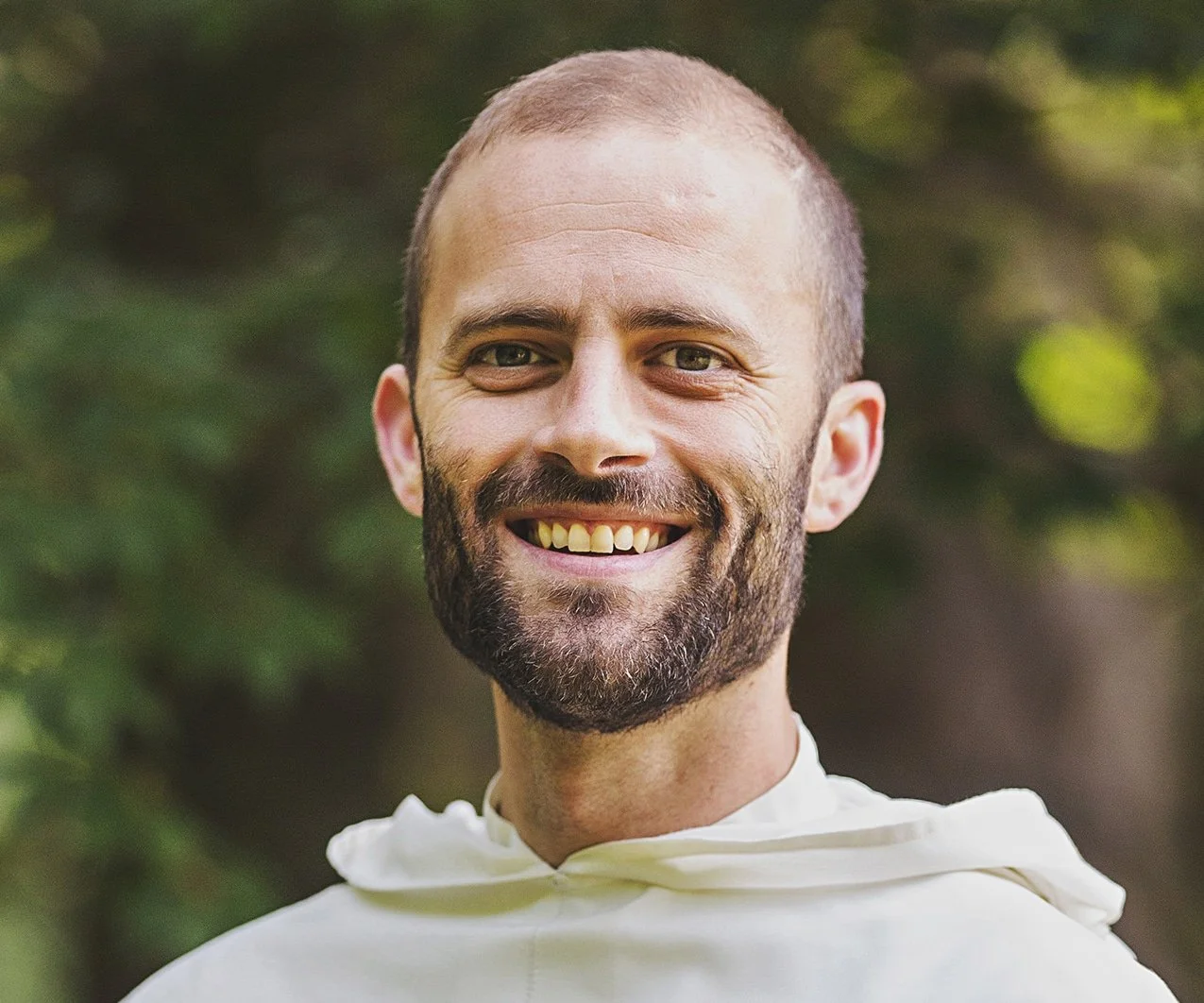
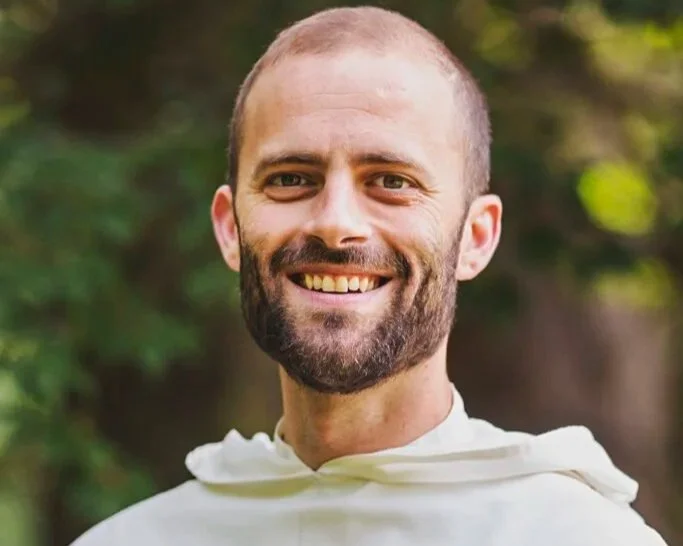
Fr Gregory Pine OP is an Assistant Professor of Dogmatic and Moral Theology at the Dominican House of Studies and the Assistant Director of the Thomistic Institute. He was ordained a priest in 2016 and holds a doctorate from the University of Fribourg (Switzerland). He is the author of several books including Prudence, Your Eucharistic Identity, and Training the Tongue. He is a regular contributor to several podcasts including Godsplaining and Catholic Classics. He kindly agreed to respond to some questions about priesthood from his point of view as a Dominican friar. Here’s what he had to say.
As a priest, you are configured to Christ in a unique way through the sacrament of Holy Orders. How does this affect your self-understanding, both in sacramental action and in the ordinary rhythm of your life and prayer?
Something I’ve been thinking about recently is that, as a priest, you have a kind of privileged access to the centre—that is to say, a privileged access to people’s hearts.
Clearly, God has privileged access to the centre; he has privileged access to people’s hearts. As his instrument, as an instrumental cause, a human being can share in the finality of God who is the principal cause.
Even though the instrument has its own form, power, and operation, the principal cause takes that instrument to hand to deploy it in service of an end which goes beyond it or transcends it. That may sound overly complicated, but the basic idea is that God has access to the centre, and he works through his priests. So priests have a kind of access to the centre.
A lot of ministerial and sacramental life is a matter of being with people at the centre of their lives—at the depths of their hearts—through the ministrations of grace and virtue and the gifts of the Holy Spirit. So much of it comes down to: the Lord sees you, the Lord knows you, the Lord loves you—and you have it in you to consent to and cooperate with what he is doing.
I find that much of my priestly ministry is a matter of nourishing hope in the Christian faithful. The Christian vision is grandiose—it’s awesome—but we need not be intimidated by its scope. We can be encouraged by the recognition that the Lord has given us all that we need in order tocarry out his commands.
How do the evangelical counsels of poverty, chastity, and obedience relate to your priestly identity?
Obviously, priesthood in the West calls for celibacy, and celibacy and chastity are closely related. Priesthood everywhere calls for a obedienceof a certain sort, though it is expressed in different modes in priesthood and in religious life. So, they are not unrelated.
But I conceive of poverty, chastity, and obedience according to my religious consecration, and I see priesthood and religious life as mutually enriching, not in tension.
When I think about what these counsels do, I turn to Thomas Aquinas (ST IIaIIae q.186, a.7), where he describes their threefold use:
They heal concupiscence: the lust of the eyes, the lust of the flesh, and the pride of life are addressed respectively by poverty, chastity, and obedience.
They curb solicitude for secondary goods: for possessions, for family life, and for self-rule.
They offer the whole person: possessions, body, and soul—making of oneself a kind of holocaust or total offering.
So the whole trajectory of religious life is that of a holocaust, while the whole of priestly life is a matter of worship. The fact that the priest is also a victim means priesthood and religious life are deeply related.
© Mazur/cbcew.org.uk
Is there a form (or forms) of prayer which is most important for priests or nourishes your life as a priest in a particular way? e.g. Liturgy of the Hours, Eucharistic Adoration, Rosary, Lectio Divina
The celebration of the Holy Mass is primary and principal in a priest’s life. The prolongation of Eucharistic worship (Eucharistic adoration, the Liturgy of the Hours, and so on) can all be understood as flowing from and returning to the Eucharist. They are ways of “bleeding in and bleeding out” from that central act.
One of the mottos of the Order of Preachers, taken from St Thomas, is contemplare et contemplata aliis tradere. How do you understand this theologically, and how is it lived out concretely in prayer and in preparation for preaching?
The Dominican life is an apostolic life, a contemplative mode of the active life. The friar preacher exists for contemplating divine things and preaching for the salvation of souls.
Insofar as preaching is active, it is governed by its end, but it can also be seen to flow most readily from contemplation. In that sense, it can even be said to surpass the purely contemplative life in its contemplative generosity.
To contemplate is to be in living contact with God as he manifests and communicates himself. The phrase is often translated “to hand on the fruits of contemplation,” but I don’t see “fruits” there, but contemplata, or “things contemplated”, or even God contemplated.
Drawing again on Thomas Aquinas, God is described (as the object of faith) as prima veritas, first truth. So this becomes a matter of coming into living contact with God, and then, as it were, coming down from the mountain with one’s face transfigured and making known to the people that God lives and that he can be known and loved.
Concretely, the whole of life is formation, both initial and ongoing. One seeks always to live in the presence of God, in ministerial, apostolic, personal, and worshipful ways. The priest or religious should live in the divine company, so that what he shares is not trivial information about God, but God himself, at work in his humanity.
© Mazur/cbcew.org.uk
How does belonging to the Order of Preachers shape your priesthood?
Another Dominican motto is laudare, benedicere, praedicare—to praise, to bless, and to preach.
To praise: Dominican life has a monastic quality, with regular observance and a rule of life. This kind of structure is vital for priestly life more broadly.
To bless: Dominican life has a priestly shape, ordered to sacramental life, facilitating contact between the people of God and their Saviour. We encounter God by faith (spiritually) and by sacrament (corporeally).
To preach: There are different modes of preaching: Evangelical (both apologetic and kerygmatic), Catechetical, Moral, and Mystagogical. All priests—and the Domnican friar, in particular—are called, in some measure, to all four. Ultimately, the goal is to conduct people into the fullness of the mysteries, to put them in contact with God, nourishing them on the Word, giving it as food and drink.
The Dominican charism has a particular capacity to hold all of this together in a unified and beautiful way.
Which saint has most shaped your understanding of priesthood?
Thomas Aquinas, by far and away.
His teaching on character, for instance, is especially important. Character is not just an indelible mark; it is a power, as it were, grafted into the intellect, disposing us to valid acts of worship.
Baptismal character disposes one to receive the sacraments for his own enrichment.
Confirmational character is oriented toward the enrichment of othersas it capacitates us for witness.
Ordained character is for bestowing divine things on the people of God, participating in the descending order of sanctification.
So character is a participation in the priesthood of Jesus Christ, conforming the priest to Christ in his saving activity. It grounds the priest’s role as mediator between God and man, entrusted with the office of bestowing divine things.