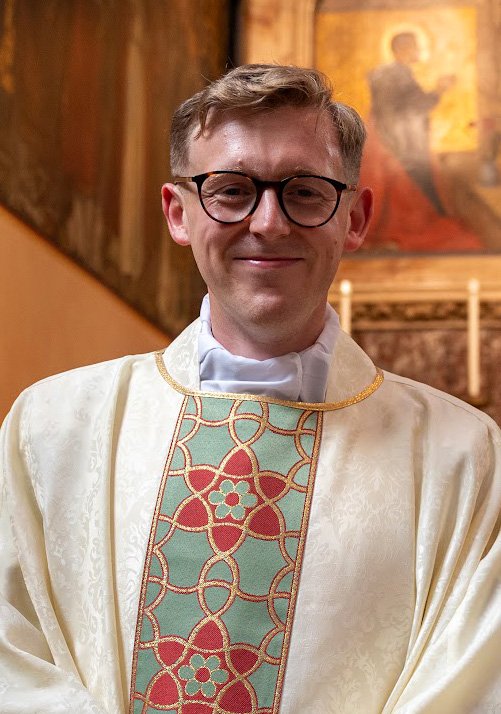
277 Days a Priest
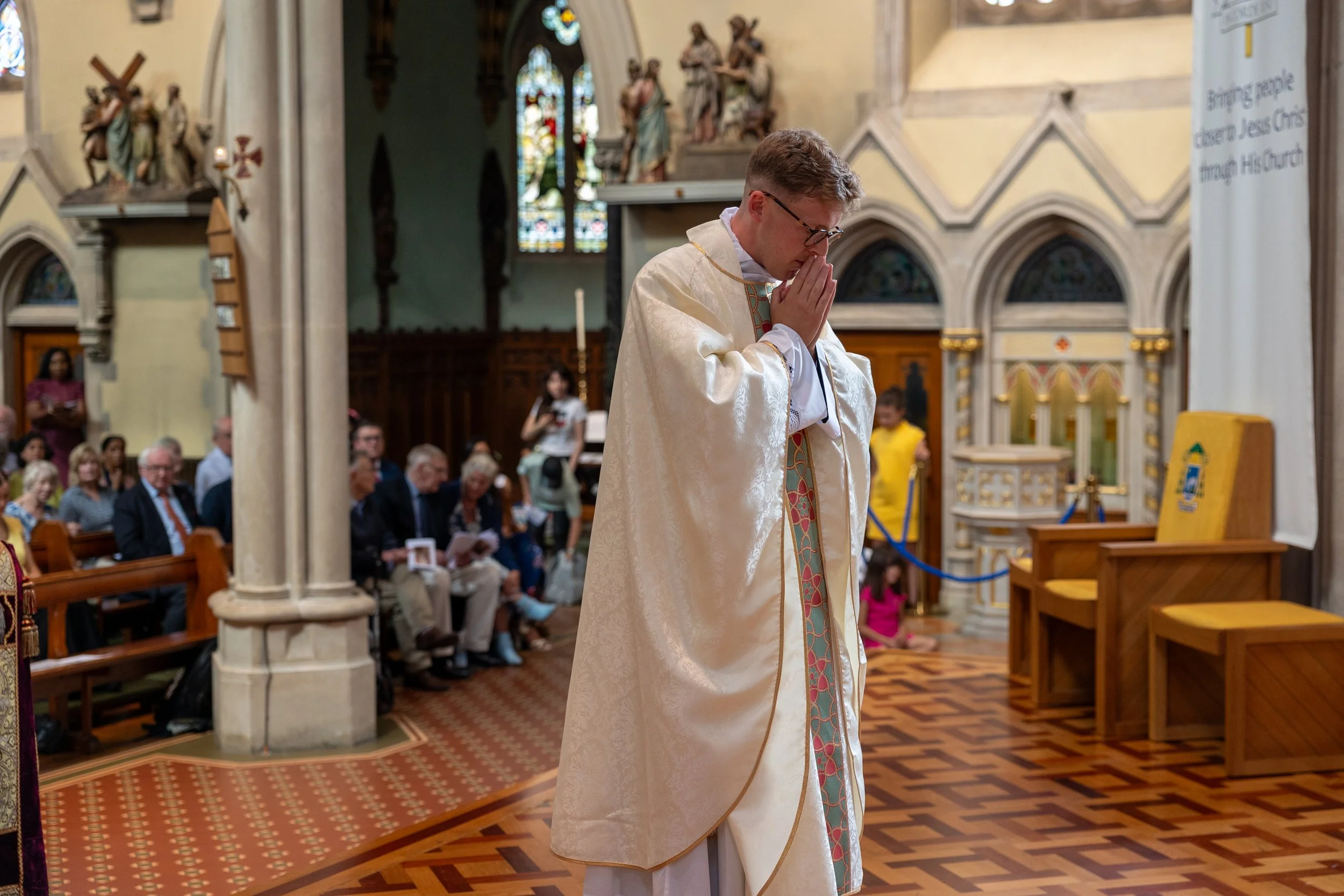
© St John’s Cathedral, Portsmouth
Fr Ryan Browne, ordained a priest just last summer, already has a full and varied ministry in the Cathedral parish in Portsmouth. He kindly agreed to answer some questions about his first months of priesthood.
You’ve been a priest now for almost a year. How did your time in seminary prepare you? And what has come as more of a surprise?
As I write this, it has been 277 days since my ordination to the priesthood on 19th July 2025. A Seminary is a place set apart for the training of diocesan priests. I studied for five years at the Venerable English College, Rome. Every priest, including myself, has their own opinion on the role of seminaries today in the Church. You’ll find some who think that they are an outmoded system that desperately needs reform, maybe even to be rethought altogether. Others may express a more positive outlook on the seminary, arguing for the need to strengthen and sustain our seminaries. I think I fall somewhere in the middle: seminaries are a vital part of formation, but like all institutions, they need to be continuously remoulded so that they can help seminarians prepare well for the arduous task of pastoral ministry today. The main strength of the seminary for me was that it gave me time and space. It gave me time to discover who God was actually calling to the priesthood. I went to the seminary with a sense that I was being called to this vocation, but I don’t think I really knew who I was at 23 years old, when I entered the seminary. To be a priest, you need to know yourself well. You need to know your joys, your pains, your dreams and desires. In this sense, seminary really did prepare me well for the priesthood. By knowing ourselves, it means we can allow the Lord to touch our hearts very deeply, which permits us then to share this same encounter with others when we celebrate the sacraments, in which we stand in the person of Jesus Christ.
What does a typical day look like for you? Is there a particular part of your ministry that brings you the most joy?
Since I was ordained a deacon in the summer of 2024, I have been based at St John’s Cathedral in Portsmouth. We typically start the day as a community of priests. Bishop Philip, Canon James and I meet in the chapel for adoration and morning prayer. After this, the morning races ahead, which can include catching up with correspondence, meetings with parishioners or enquirers of the Catholic faith, or perhaps a visit to our primary and secondary schools. At about 11:45 I sit in the confessional for 25 minutes before Mass in case anyone would like to receive the Sacrament of Reconciliation. Then at 12:15 I celebrate Mass in the Cathedral. After a short pause for lunch, I try to get out for a walk by the sea if the weather permits. The afternoon slots can range from meeting with university students (as I am chaplain to the University of Portsmouth), visiting the sick & housebound, or preparing homilies/ talks. The evenings can be quite busy too: youth group, RCIA, Theology on Tap group, or perhaps a talk at CathSoc followed by a short stop at Wetherspoons! I think the aspect of ministry that brings me the most joy is hearing confessions. Because this is a Cathedral, we get a lot of people wanting to come for confessions. Last Saturday I spent about three hours hearing confessions. It’s a real blessing to be able to impart the mercy of the Lord Jesus and to see the relief in people’s eyes as they hear the words of His forgiveness in the prayer of absolution.
Has your prayer life changed since your priestly ordination? What helps you remain rooted in Christ amid the demands of the parish?
This is something I’ve been thinking about a lot recently. My prayer life has changed. Like everyone, I’ve spent a lot of time worrying about the way I pray: am I doing it right? Am I in the right place? Am I saying the right things? Prayer can be quite perplexing and challenging at times and we can become frustrated with ourselves. However, I then remember what a wise, old priest said once, “prayer is the raising of the heart and mind to God.” This doesn’t just have to come in the form of a holy hour. This can be done at any moment of our daily life: at the computer screen, on a walk, on the bus. The focus then isn’t about “I should be praying in the chapel right now”, but the focus becomes Christ within the demands of our life. As I live, breath, talk, succeed, fail, I know that Christ is with me through it all, because He is the Good Shepherd who never leaves his flock.
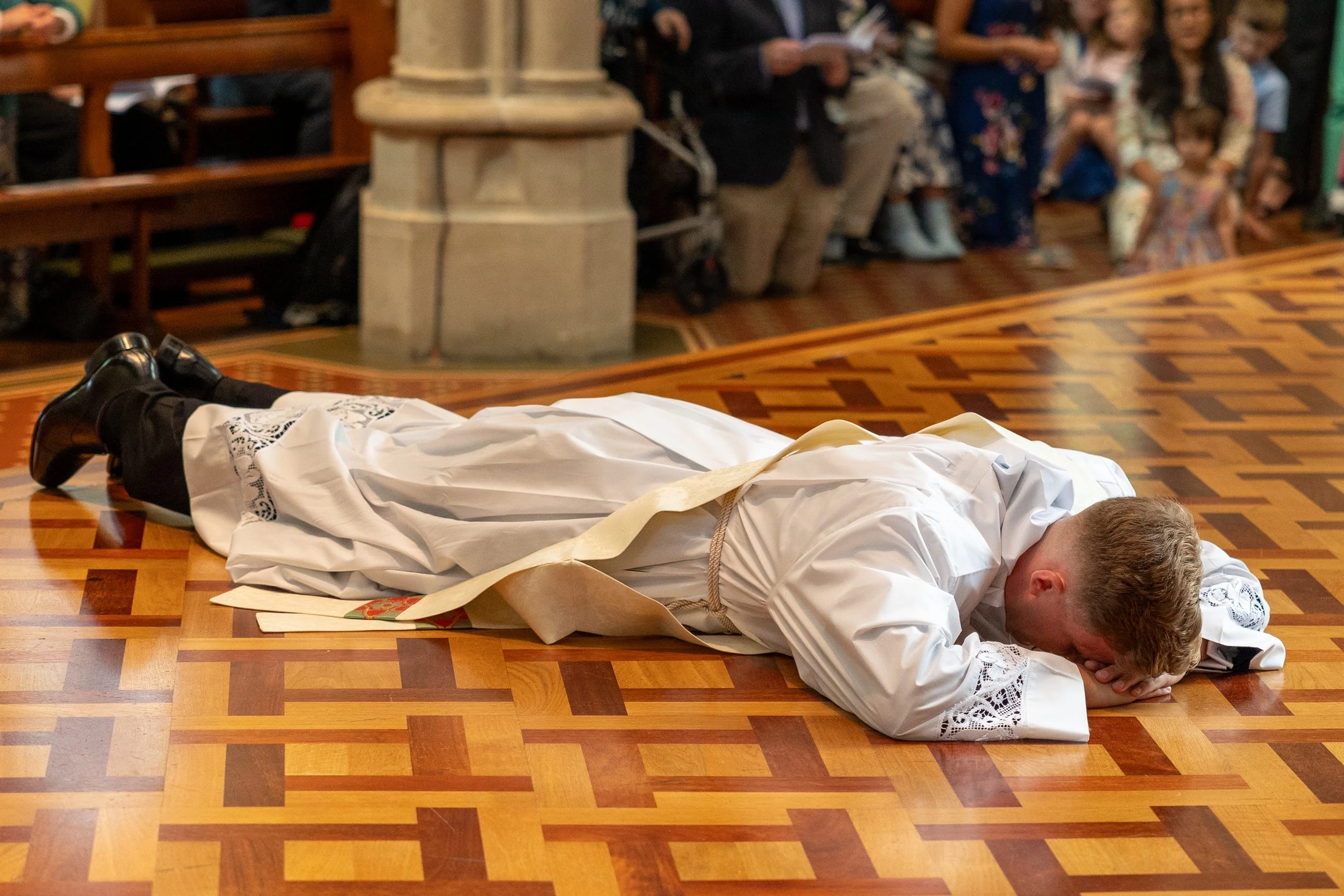
© St John’s Cathedral, Portsmouth
What do you think is most misunderstood about priesthood? How accurate was your own idea of the reality?
The greatest misunderstanding about priesthood is that some believe you have a personality transplant at ordination. I met someone outside the house yesterday and they asked me, “is it a sin for priests to go to the pub, to use social media, to use video games?” Priests are men set apart for a particular purpose: to celebrate the mystery of Christ’s redemptive work through the sacraments. Orders give you a sacramental character that infuses particular graces within your soul to sustain your ministry, but this doesn’t cut off your own personality, the graces build on it.
How would you describe the experience of hearing confessions? Has it changed your understanding of mercy and judgement?
It is such a humbling experience. When I pray the Prayer of Absolution over someone, I recognise that I’m also a sinner and not worthy to be God’s minister of forgiveness. At the same time I also yearn for the time when I can go to confession and receive the same mercy and forgiveness. We all have brokenness, most of us though are very good at hiding it from others, even those closest to us. In the confession, all barriers are taken away, and someone can speak openly because of the sacred seal of the sacrament. Every confession I hear I try not to get in the way of God’s healing mercy. I try, and often fail, to be a vessel through which people can experience the healing touch of Jesus.
Looking ahead to a lifetime of priestly ministry, do you think there are any particular habits or foundations which you will need in order to sustain you?
One thing that is a necessary foundation is contact with good friends. As a priest, my primary function is not to be friends with parishioners. We can be kind, generous and sociable, but we are chiefly the shepherds of souls entrusted to their care. This means all priests need good, supportive friends (especially with other priests). My friends who are priests are an enormous support to me. They listen to me with an open heart, especially when days are tough. I sense this is one of the main foundations that will sustain me as a priest and keep me grounded.
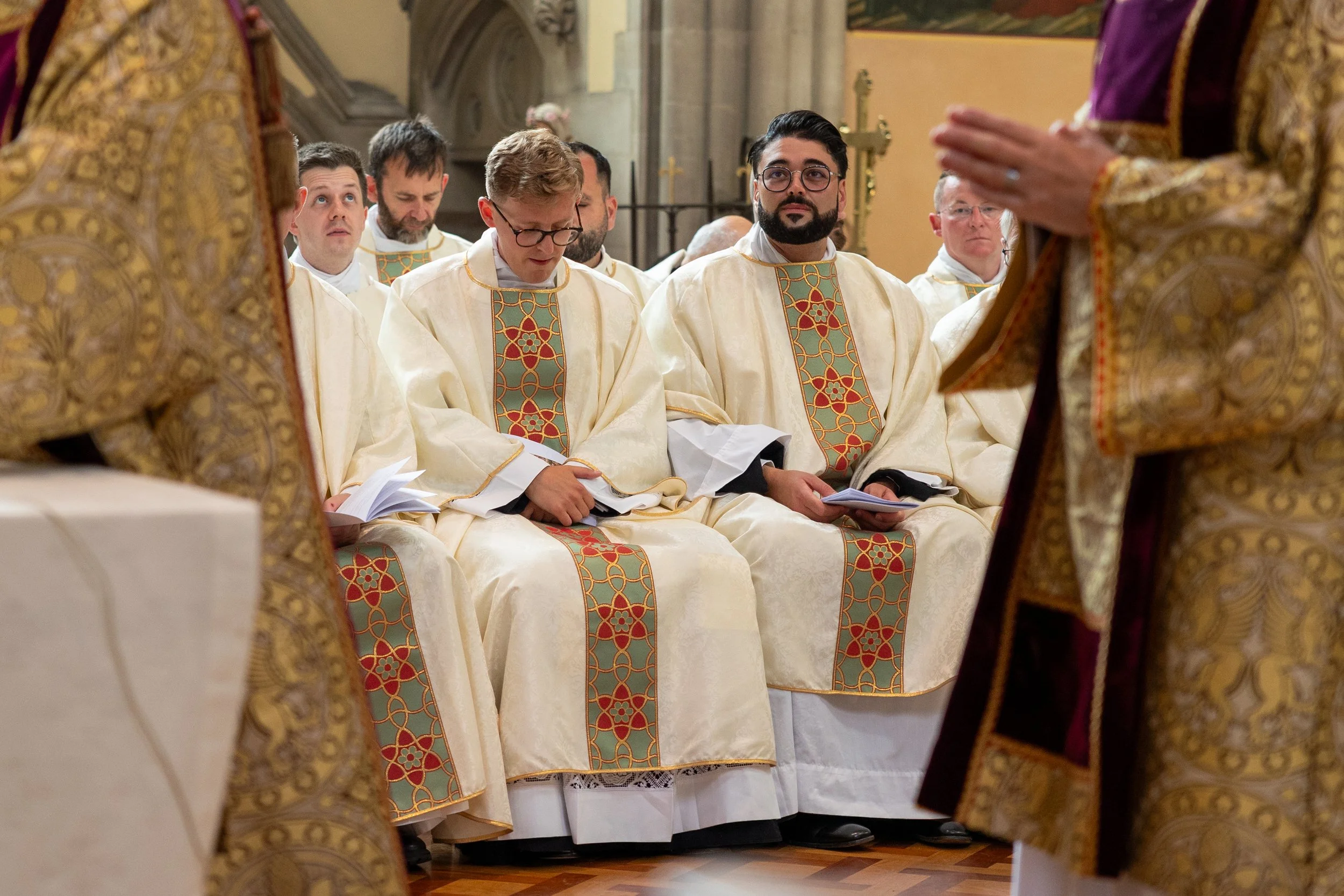
© St John’s Cathedral, Portsmouth
What would you say to a young man who thinks he might be called to the priesthood?
Go for it! Speak with a trusted friend, your parish priest, a religious sister, your vocations director in your diocese. Perhaps there is a vocations group that meets in your diocese, why not join it? Remember though that this is a vocation – it is God’s call in His Church, not a job application. If God wants you to be a priest, you will be one in His time. This is not simply your decision, it is a three-way discernment: God, you, and the Church. You have to trust in God’s plan for you.
Is there a particular saint who inspires you in your priesthood? What do they teach us about the life and ministry of the priest?
A favourite for me is the great Jesuit Saint Francis Xavier, because I was baptised on his feast day on 3rd December 1995. When I lived in Rome, I would often visit the Gesù church to pray in front of the relic of Saint Francis. St Francis baptised tens of thousands of men and women during his mission in Asia. He was a great evangeliser and preacher, who wasn’t afraid to use local traditions and customs to communicate the message of the Gospel. I think St Francis teaches priests today that courageous creativity in the preaching of the Gospel is essential.