Forth in the Strength of Christ
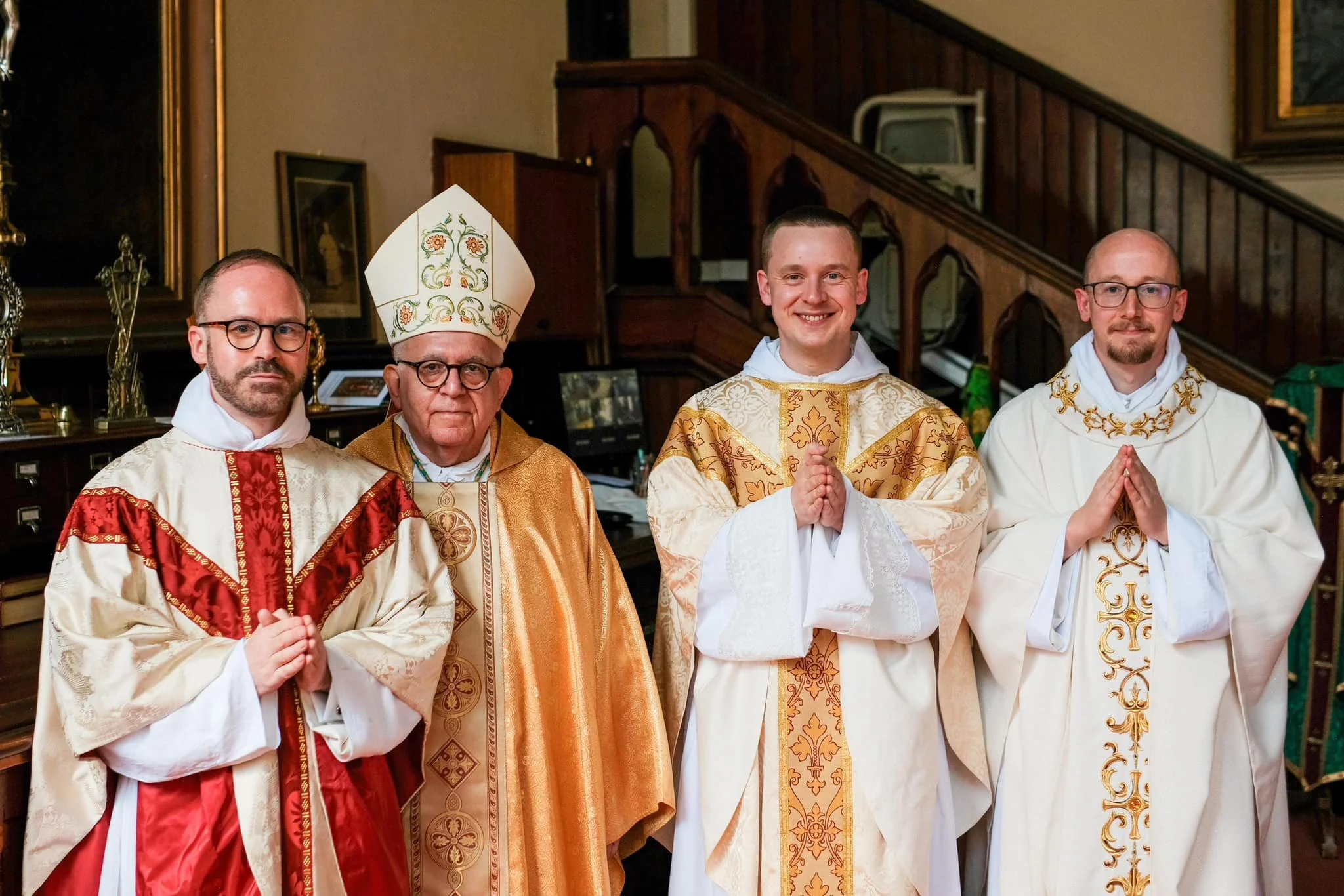
The author (far left) on the day of his priestly ordination. © Irish Dominicans
“Do you judge them to be worthy?” is the question asked by the ordaining Bishop during the Rite of Ordination to the priesthood. When Archbishop Augustine Di Noia, O.P. put that question to my Prior Provincial on the day of my priestly ordination, it struck me that no man about to be ordained would answer that question affirmatively of himself. He knows too well his own unworthiness. But the words of the Archbishop in his homily that day have stayed with me: “Brothers, despite all the strains of this ministry you must have strength because of the strength of Christ. You must not waver.”
It is often remarked that to be a Catholic in contemporary Europe is a counter-cultural choice. It is perhaps even more so to be a priest in such a world. It requires the strength of Christ to persevere in that path. All that is true. Yet implicit in that remark there is often the assumption that priesthood today is difficult in a way that it was not in the past. I read recently the writings of Fr. Dominic Brullaghan O.P., who ministered in the 1700s during the penal times near my family home in Ireland, when practice of the Catholic faith was outlawed. Many priests had been martyred. But in his descriptions of the strains of priestly ministry at a time of great persecution, we detect a note of easy joy as he went about his dangerous and secret work. He did not waver.
That unwavering dedication came from his understanding of what it means to be a priest of Jesus Christ. It was this understanding of the priestly character he had received that allowed Fr. Brullaghan to counsel his fellow priests that they should place the people’s “spiritual good before your own corporal refection”, the service of a persecuted people in need of priestly mediation and ministry taking higher priority than bodily comfort. Priestly ordination does not confer on a man a new job or function. It changes who he is. A priestly character is imprinted on his soul. It is this character that allows him to act despite his sense of personal unworthiness. There is freedom in knowing that ultimately it is God who acts, whatever my limitations might be. Though I am called to serve as best I can, it does not depend on me. This freedom is accompanied by humility, because it requires the recognition that whatever success a priest might appear to enjoy, it is ultimately a gift from God.
This understanding of priestly character has helped me in the strains of this ministry. And while the challenges of this ministry are different to those experienced by Fr. Brullaghan, the joy of being a priest in a difficult time remains. Priesthood today is lived out in a profoundly secularised world where the pressures of life are often overwhelming. We are under constant pressure to improve ourselves, to rebrand ourselves, to present our inner self for public consumption. We are exhausted and overstimulated, caught in a cycle of constant comparison and psychologically overloaded. People cannot live like that for very long. But that crisis opens a door to faith. We are not today met with the violence that characterised the penal times in which Fr. Brullaghan lived. But just as priests then needed the strength of Christ to live a hidden life, saying Mass at Mass rocks in forests or on mountainsides, with sentries watching for approaching troops, so today we need that same fortitude to counter the crisis of hope we see in our societies. There is a palpable hunger for more than the numbness that the burnout society offers, a hunger for transcendence that makes this an exciting cultural moment in which to be a priest.
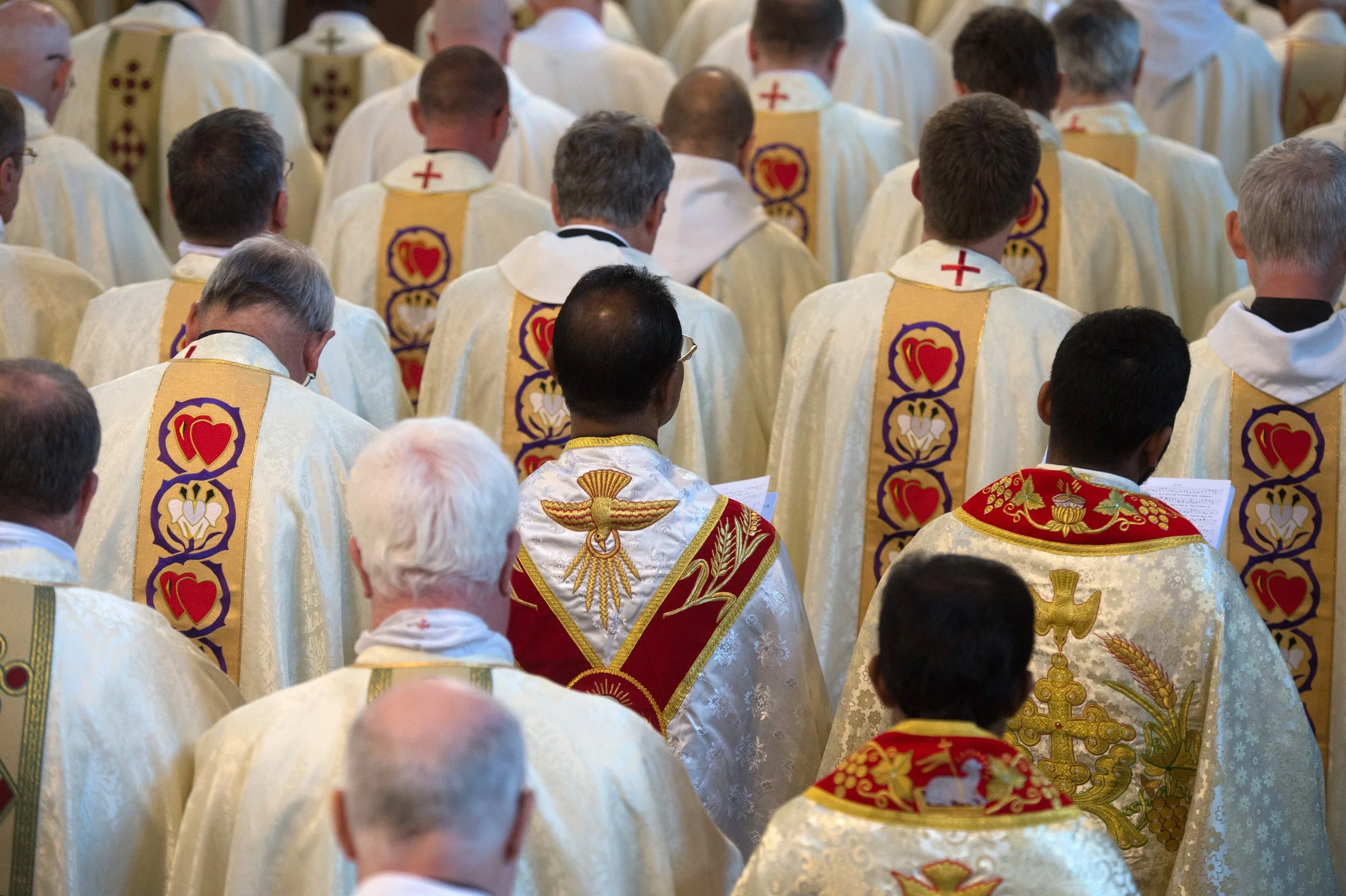
© Mazur/catholicnews.org.uk
Being a priest opens up unexpected conversations, especially about spiritual matters. A conversation with a philosophy student stands out. His default worldview was one of radical doubt. Yet it occurred to me that if his atheism was as entrenched as he claimed, it was an odd thing to seek out a Catholic priest to discuss it. There is a famous story in which St. Dominic spent all night in conversation with an innkeeper who held to the Cathar heresy, and by the end of the night St. Dominic had persuaded the innkeeper to return to the Catholic faith. I did not spend all night in conversation with the philosophy student, but we did spend an entire afternoon thinking through questions of faith and doubt. I met him a year later and he told me that that conversation had led to soul-searching about his atheism. In the meantime, he had reverted to his childhood faith and started to live out the Catholic faith. Descartes is a surprising springboard for the path to faith.
In these encounters, I have seen with surprise the trust that people put in their priests. I had thought that that era had largely passed. And yet people come to us, in Confession and outside of it, and entrust us with the most sensitive areas of their lives. I have heard stories of great pain, where people have opened up their hearts and souls to me in a way they have not with others. People make themselves vulnerable and present those aspects of their lives they would rather others never see. They do so because they trust the priest. They tell of their failures and their weaknesses, but also their joys and hopes, with an honesty that is both humbling and, in a certain sense, beautiful. They wonder how God fits into what they are experiencing, and I try to help them see how God might be working in their specific situation. They ask my advice. I give it tentatively.
Many times, I have come away from such moments worried that I have let people down. I remember one day a man came to the door of the Priory, threatening that he would take his life that evening. What can one say in that situation? How can some words from a priest be in any way adequate for a man who sees his life as so hopeless that it is no longer worth living? The man who came to the Priory door that day is doing well.
Fostering that relationship with Christ is at the centre of the priest’s work. But as someone once said to me, you cannot lead people to the foot of the cross unless you have been there yourself. To serve others well, the priest must tend to his spiritual life and avoid the temptation of constant busyness. Just because something is good and holy does not mean it is the prudent thing to do. There is a Dominican motto: to contemplate and share with others the fruit of that contemplation. That presumes that we have made time to develop our interior life, something that is not always easy to do. But the priest must carve out that time if he is to be useful for the salvation of souls. It is from this interior life that the priest will gain the strength of Christ that Archbishop Di Noia emphasised at my ordination.
Yet sharing the fruits of our contemplation presumes activity. It is a mistake for a priest to draw too clear a distinction between his interior life and his pastoral activity – the two are symbiotic. Pastoral ministry hasbeen incredibly helpful for my own interior life. I have been touched by the deep faith of so many people and their commitment to the Church. Often, I have been struck by the holiness of the people I encounter, who perhaps would not consider themselves holy at all. Their holiness is not a pious caricature, but embodies it in everyday life. To accompany those striving for virtue - beset by weakness, yet persevering - is to witness the battle for holiness in real time. Experiences such as these have challenged me to be a better priest and indeed a better Christian. Through serving others I have grown spiritually.
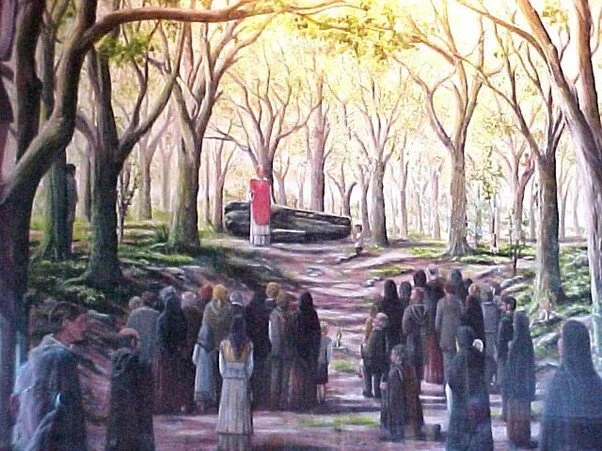
Mass celebrated on an Irish ‘Mass Rock’
But it is above all in the Mass that the priest stands at the intersection between God and His people as he offers the Holy Sacrifice. He follows in the path of men who did not waver as they offered the Mass in secret at Mass rocks, or who hid themselves in priest holes from priest-hunters. Standing in that tradition reinforces for me the awesomeness of the Mass. Part of the priest’s role is to celebrate the Mass in a way that its weight and wonder is made manifest to the people. In a world that can feel cold and empty, the beauty of the liturgy is a source of consolation. Hearts are lifted up, allowing the people to pierce the veil behind which the mysteries being celebrated are hidden.
Standing before the ineffable wonder of the Mass, the priest bears the weight of his personal unworthiness. An awful awareness, tempered by wonder that nevertheless he has been called to go to the altar of God, the joy of his youth. Like the priests who offered the Holy Sacrifice at the Mass Rocks, he goes forth in the strength of Christ to minister to a world numbed by hopelessness. And he prays, in humility, that he may not waver.