Passion, Realism, Seeing the Good, and Resilience
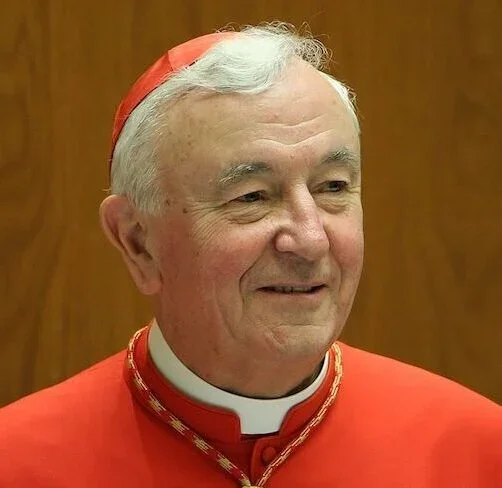
Cardinal Vincent Nichols, Archbishop Emeritus of Westminster (© Mazur/catholicnews.org.uk)
My reflections on priesthood today are not as they might have been forty or so years ago. But I do not claim, either, any great wisdom - that is never a guaranteed gift of old age! But these are the themes on which I have been pondering, presented simply, with much greater development needed in each one.
First a priest, or someone aspiring to priesthood, must have a passion.
Without a passionate heart, priesthood can either be, or can quickly become, a thing of routine and duty. The first focus of this passion will be love of the Lord. But it may have other and diverse focal points, arising from a wonder at life, at its potential, at its beauty. It might be, as it was for me, initially about education and the challenge of understanding more about life and motivating people (and myself) to enter more deeply into so many themes and wonders. It might be about justice and a burning desire to ‘put things right’. It might be about truth and the intellectual quest for deeper knowledge. It might be about history, or beauty, or drama or poetry or even mathematics!
But the critical point about this passion is that it has to grow and develop in its focus on Jesus, the Christ, who is the source and summit of that quest. We might not start there. But that has to be the pathway of formation – life-long formation – seeing in him the Alpha and the Omega of all human endeavour. Then the passion becomes a passion for Jesus, not apart from these precise focal themes, not as something separate, but seeing in him their fulfilment and goal, and, therefore, my fulfilment and goal.
© Mazur/catholicnews.org.uk
Then there is a second theme. A priest must have a great sense of realism.
Yes, we are passionate about the Lord and the wonder of the created world. But we have to temper that with a keen and abiding sense of realism. We progress step by step. Our faith is not an ideology, a panacea for all ills, to be forced on people, to which they must conform or be abandoned or excluded. An ideology always seeks to destroy all that stands in its way. We do not do that, even in our dreams. This is because we know that the utopia will not be here. We know that it is the Holy Spirit who nudges and prompts us to make progress, not simply the force of argument or passionate conviction.
In this way realism, as well as passion, is focussed on Jesus, on the humanity which he embraced, on the patience and openness with which he welcomed and summoned those who caught sight of his beauty and his truth. I believe that at its best ours is a delicate, respectful and almost deferential ministry, nurturing growth even at its slowest pace, with an utterly patient and gentle use of strength.
There is another type of realism that is central to our ministry too. It is a willingness to accept and embrace the reality of the appointment we have been given. As priests we are sent to this place or that, not of our choosing and maybe not to our liking. But this is where the good Lord wants us to be. This is our mission. Too easily we can imagine that another parish, or another ministry, or a far-away missionary endeavour would bring out the best in us. The people to whom we are sent very quickly realise if our hearts are not truly in this place, if we are hankering for something different. The reality of the mission we are given is precisely the ground on which we are to work out our salvation and serve the lives of those around us.
© Mazur/catholicnews.org.uk
My third point of reflection flows from the second. At his best, priest is a person of great faith and love of God. He is one who moves easily to praise God and to praise God first of all as the Creator of all life, the giver of life, the source of all love and goodness.
The priest, then, must be a person who instinctively sees the good in all things, or at least searches for the good in everything.
His eyes are attuned to, focussed on goodness, even in the most unpromising of circumstances.
I remember vividly a conversation with a fine solicitor whose specialism was in defending the worst offenders and criminals. He was very familiar with evil. But he told me, with utter certainly, that he had never met anyone who was totally evil. He had eyes for the remnant of goodness that was still there, the faintest of God’s fingerprints in this person, this creation of God.
Tiredness, weariness, demanding routines can easily dull our eyes for goodness. Then the corrosion of cynicism creeps in, slowly encrusting our heart and soul, bringing unhappiness.
But a good priest recognises and rejoices in the strength, tenacity, sincerity of the faith of his people and in their devotedness to the Lord. The good priest knows his people, knows their struggles and achievements, discerns the ways in which the grace of God is at work in our world and is to be celebrated. In knowing the people in his care, the priest will know the grace of God in the lives of each and every one.
The good priest, then, knows that he is endlessly the recipient of encouragement and inspiration from the lives and goodness of those to whom he has been sent to minister. They are the instruments of God’s grace for him, if he has the sensitivity and humility to recognise it. As was said to me once: ‘Don’t you worry, Father, the faith is in good hands here, the hands of the people!’

© Mazur/catholicnews.org.uk
My fourth and last point is this: the priest needs to have a good dose of resilience in his life and person.
Priesthood can be tough going. This can be clearly so in the life of a diocesan priest. A priest needs to be able to cope with all sorts of situations, many of which are to do with the ordinary practical routines and expectations of this way of life. A priest will have to tackle many different problems and challenges for which he may feel unprepared. Not everything can be squeezed into his years of formation. The priest has to know how to cope through his own inner resources.
By this I do not mean that the priest is constantly ‘on his own’ and a kind of ‘lone ranger’. No. Every priest must learn how to depend willingly on others, cooperate with others, enjoy true friendship and know where his support is to be found, whether within the presbyterate or among his closer circle of friends. But these are things which come gradually, into which we must invest time and effort and never simply take for granted. Any sense of ‘entitlement’ which is lodged in the heart or soul of a priest is corrupting. In other words, I should never assume that things should be done for me, provided for me, simply because I am a priest. I have come across some who give the impression that their vocation was, at least in part, fuelled by the expectation that they would be looked after for life. That is not a worthy nor a practical foundation for priestly ministry which is, of course, a life of service, not of entitlement.
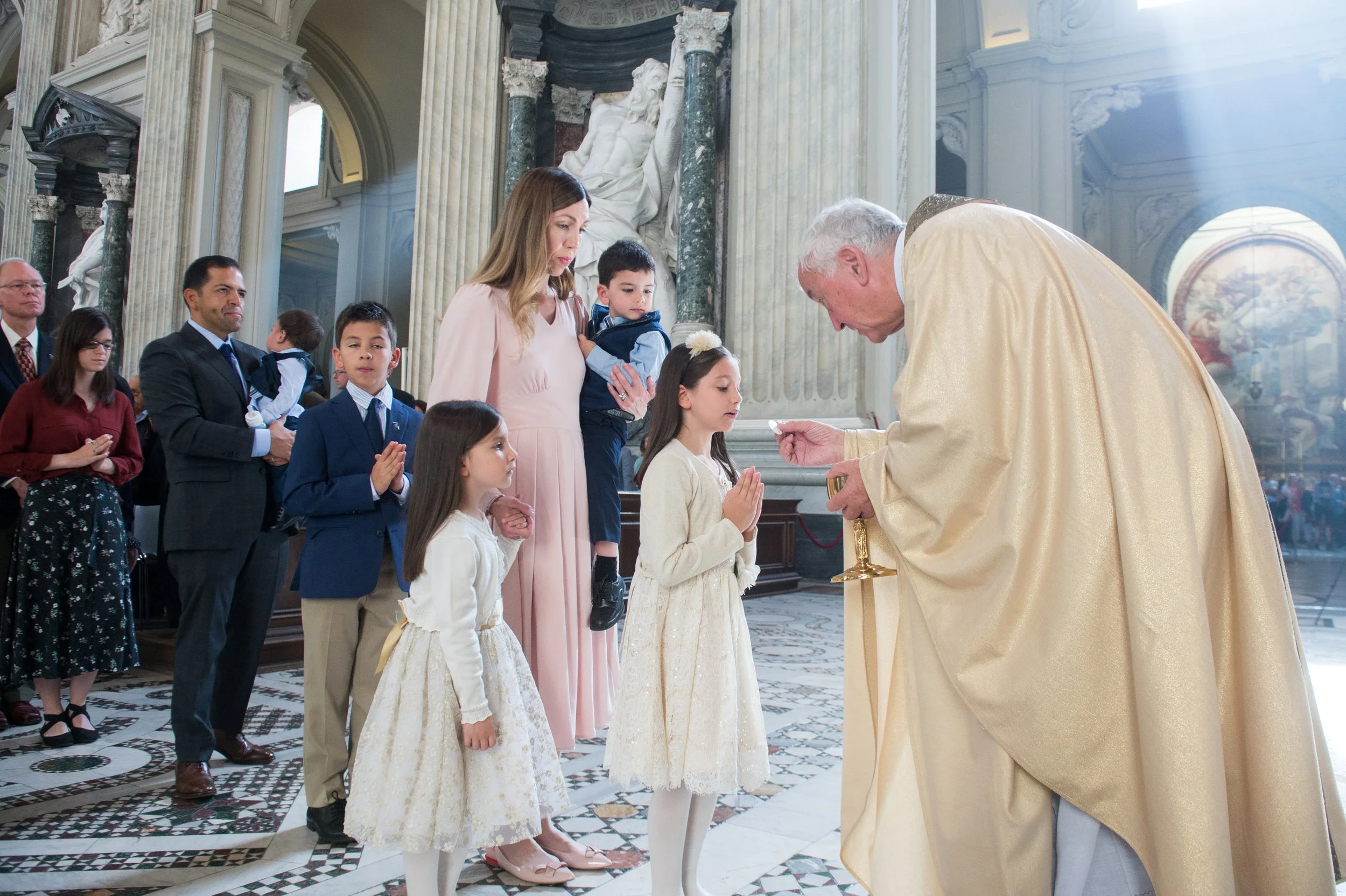
© Mazur/catholicnews.org.uk
At the heart of this resilience lies the love of the Lord. Jesus is our strength and stay. He is our closest friend, our beloved, who is constantly at our side and knows our deepest needs and desires. He is our consolation and joy.
Passion, realism, seeing the good in all, resilience. Reflecting on these four simple themes, it becomes so clear that each is a pathway which brings us closer to him to whom we have given our all. This is the heart and soul of priestly life. There can be no other. In my experience, however, the demands of ministry can easily distract us from this loving relationship with the Lord. Of course, ministry is this love in practice. But it also needs quiet nurture, time for him alone. There is a lovely line from a poem by Gerard Manley Hopkins. It reads, so simply ‘Elected silence, sing to me’. When we are with him in such silence, his music will refresh, encourage, strengthen us and fill us with a quiet joy.
+Vincent Nichols
8 April 2016