My First Triduum
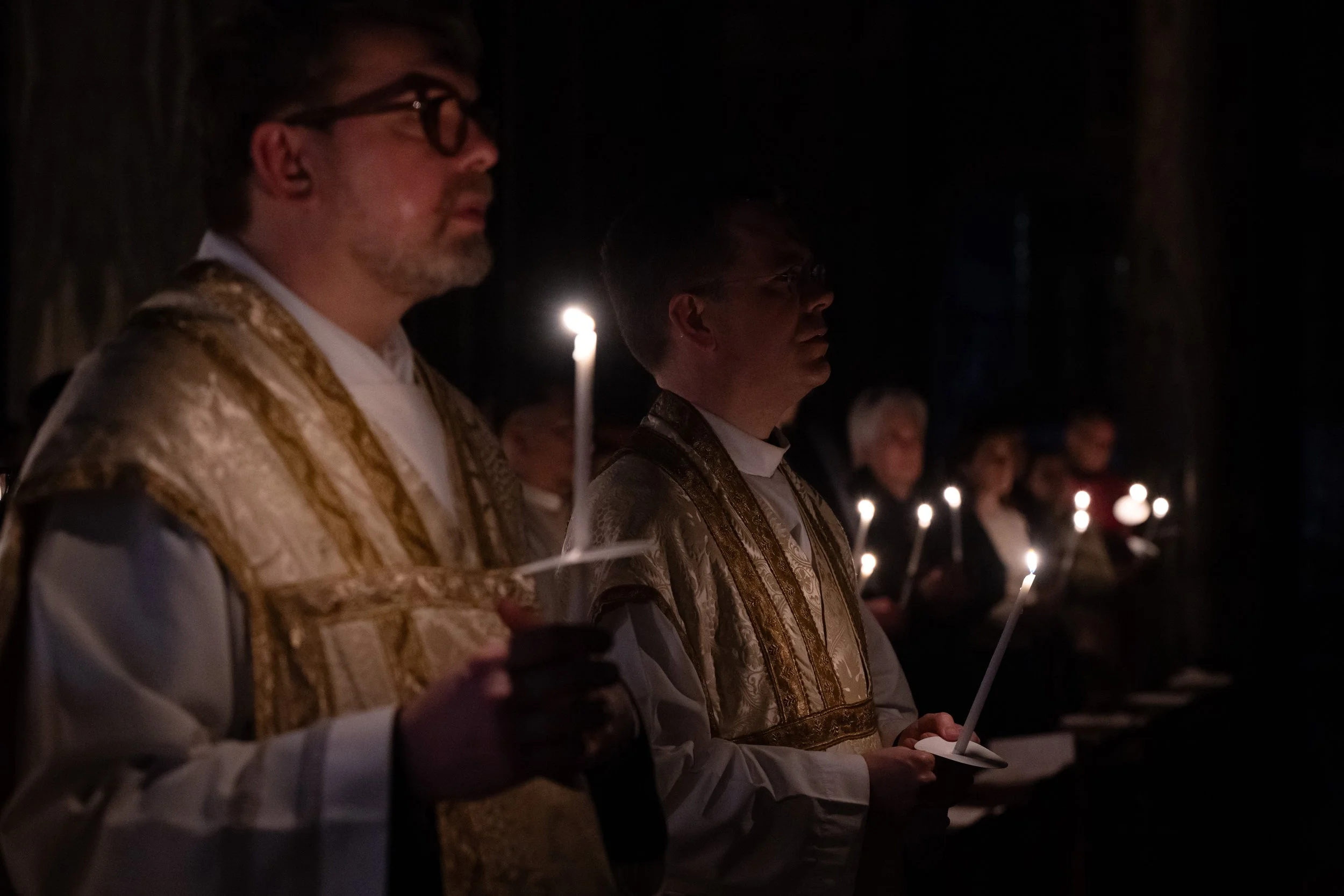
In an age before electricity, household prayers would often accompany the first lighting of a lamp or candle in the evening. The Lucernarium that begins the Easter Vigil is thus the remnant, and a liturgically magnificent one, of a practice that took place every day in houses, looked on by little children, as habitual a practice as making the sign of the Cross, or praying over a meal. A friend who remembers it still happening during her childhood in rural Scandinavia says her mother would allow twilight to finish, and darkness to fall, before bringing the house back to life with the first lit candle. These are surely the sort of lost practices that Romano Guardini was thinking of when he spoke of the modern world becoming symbolically impoverished.
Presiding a Triduum, one is very aware (anxiously so at times) of quite how many symbolic moments the whole liturgy contains. Just as the Passion accounts are triggering Old Testament citations and prophecies with almost every movement and word of Christ, and those around him, so every bow and movement, cloth and element upon the sanctuary is linked to the vast thematic undercurrent pulling us deeper into the Paschal mystery. When one is not worrying about forgetting something, there is also the tension to inhabit, with which the homilies must somehow engage, born out of the fact that these events we are re-living are not themselves a symbol. That Jesus really did die on a Cross, and rise again, and that His love, and the hope He holds out to us through and because of these events, is not metaphorical.
An aeon ago, I studied English Literature as an undergraduate which, despite the best efforts of the staff to convince us otherwise, was really a glorified book club. Nonetheless, the efficacy of images and narratives was certainly something one got used to watching, as well as the tone of the whole. The way, for instance, that some big-hearted writers could sweep you along in a way that made you forget you are reading at all, and how that quality of being enthralled was actually so much more important to most readers than being impressed. With due acknowledgement of the many and great differences, something of this applies to ‘good’ liturgy. The better it is, the less aware one is of it as liturgy, because the more one is thinking of God. One reads account of Padre Pio saying Mass; every rubric observed, and everything splendid, but - above that and palpably – God Himself being observed and honoured by everyone present.
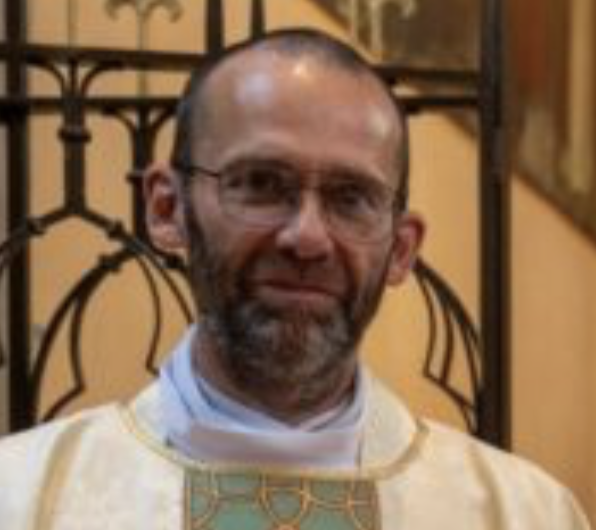
Anyway, one has aspirations, and all this sets up a brief reflection on priesthood from a late vocation (former Anglican) priest who presided his first full Triduum this year on a decidedly big-hearted housing estate with all the symbolic challenges that secular and modern culture has brought. For the Easter Vigil, the choir consisted of one man on a guitar, joined, after an appeal, by a lady on a ukulele. This was not what Sacrosanctum Concilium dreamed of, but I would like to say, not as mitigation but because it is the thrust of my argument here, that we experienced a profound and moving Vigil; that the little choir gave everything they had that night, God bless them, and that their colleagues were all there on Easter Morning; that the regular Sunday cantors brought the Psalms to life with rare sincerity; that the church boasts an excellent Deacon, who looks like a bouncer and preaches like a saint, and who intoned the Exsultet so that I actually listened to every word; that the servers were attentive and genuine. What I’m trying to say, perhaps as a fresh angle on the entrenched debates about liturgy, and a return to more traditional ways, is that we have a long way to go as a culture to recover even what it is to pray, let alone how to pray, but that we have people willing to make that journey - people hungry for truth, beauty and goodness. Perfect liturgy exists in heaven but, in the meantime, faithful, non-performative, and sincere participation is all the foundation we need to start regaining what Guardini saw as already having been lost one hundred years ago. And surely it was not perfect even then. Where we end up will be quite new, in an old way, and is already breaking out. That the Spirit of Liturgy is a merciful Spirit.
Christ left us two categories - salvation and sanctification - and both converge on what we can anticipate as the truly eternal liturgy of the Church Triumphant in heaven. But I would rather have the heartfelt liturgy we had that night, with all its non-invalidating imperfections, than a world class performance from a choir that didn’t believe what they were singing. I’m not saying everyone in that church, including their priest, was incredibly holy – I’m saying that there was a palpable hunger for Christ, and an openness to the joy of Easter morning. We may be an army in need of drill, but you would rather have untidy soldiers you could trust to stick with you than immaculately dressed ones who ran at the first sign of battle. We can all improve when the heart is sure. To believe that He really does love us, that He really is with us, is a wonderful and life-changing thing, however old you are. It is inevitably liturgy-changing too.
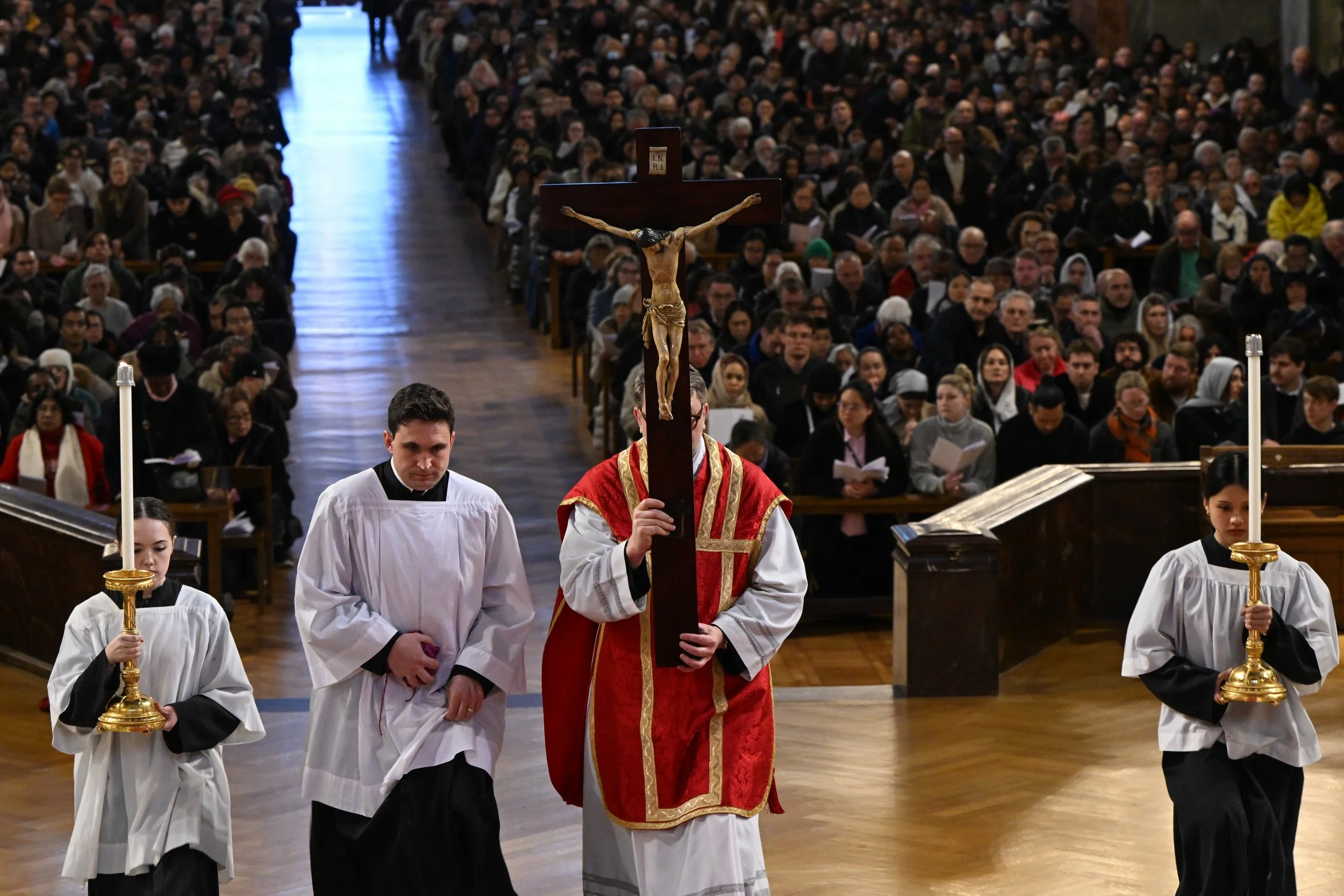
copyright: Mazur/cbcew.org.uk
The author Raymond Chandler once said that writing was ultimately the projection of a personality. Surely, in God’s eyes, ‘good’ liturgy requires as its very ground the humility, love and piety of people and clergy. Quality liturgy, and God knows it’s beautiful, can only be built on the theological virtues. Equally, that that hunger for holiness in place, one must aspire to the highest possible liturgical standards. God deserves nothing less, and wherever there is a crowd, there is talent. Any compromise one makes along the way can only, as far as I can see, be justified if one is aspiring for excellence. Is an alright ‘Old Ragged Cross’ during the Veneration of the Cross better than an ill-prepared Reproaches? Maybe, but only if we work to do the Reproaches next year (and having heard the cantors and Deacon do so well at the Vigil, I can now see that they could have handled the Reproaches very well on Good Friday). How do I tease talent out of a 200 strong congregation, some of whose names I hardly know, since it is one of three churches I help run?
I see no separation between a priest’s liturgical duties and his other pastoral responsibilities, and this was highlighted by my first Triduum. Without some organisation, the rehearsals never happen and someone is running off to B&Q to get charcoal 30 minutes before the Vigil (mea culpa). Equally, without having done one’s best to do as many visits to the housebound as possible in Lent, a lack of conviction will eat away at an otherwise excellent homily on self-giving. Without immersing oneself in (and not just reading) the timeless wisdom of the Office of Readings during Lent, one is blown off course by the anxiety and worldliness of our age. And so on. All feed the others and, while perfectionism is an enemy, love of the Perfect One is the only fuel that works.
In my former life as a writer and Anglican Army chaplain, I have been on national television and radio, led large Remembrance parades, and done my share of intense visits to prisons and hospitals. Nothing comes close to preaching and presiding at Holy Mass. I pray the Vesting prayers, when I remember, for protection as much as out of piety, and often from myself. Even just thinking about what one is doing sends a chill down my spine, and the Triduum feels like Creation itself. Yet, I have found that exhaustion, which often finds you in the big liturgical seasons, can unexpectedly become your friend, since heightened tiredness makes overthinking almost impossible. There is simply no more bandwidth and, strangely, I have rarely felt freer and more liberated in these moments than ever before. You pay for it afterwards, but the altar is another place, not your own, and the joy lasts, even when you are too tired to untie your shoelaces. Being a priest may be crazy in the eyes of the modern world, but makes sense to those who are called, and to those who support them. Vocation means we are not built for anything else, and He does sustain those who love Him. In fact, we are at our best when He is sustaining us, not only outside our comfort zones, but past the reach of every one of our natural abilities. I have never felt more peaceful, and the crazier it gets, the more peaceful I am. Deo Gratias.