Receiving More Talents
Copyright: Syro Malabar Eparchy of Great Britain
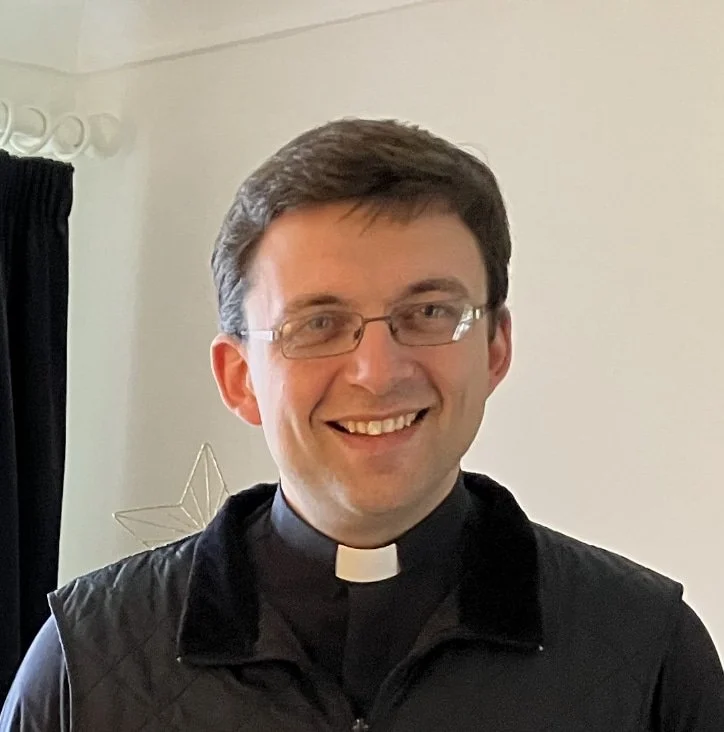
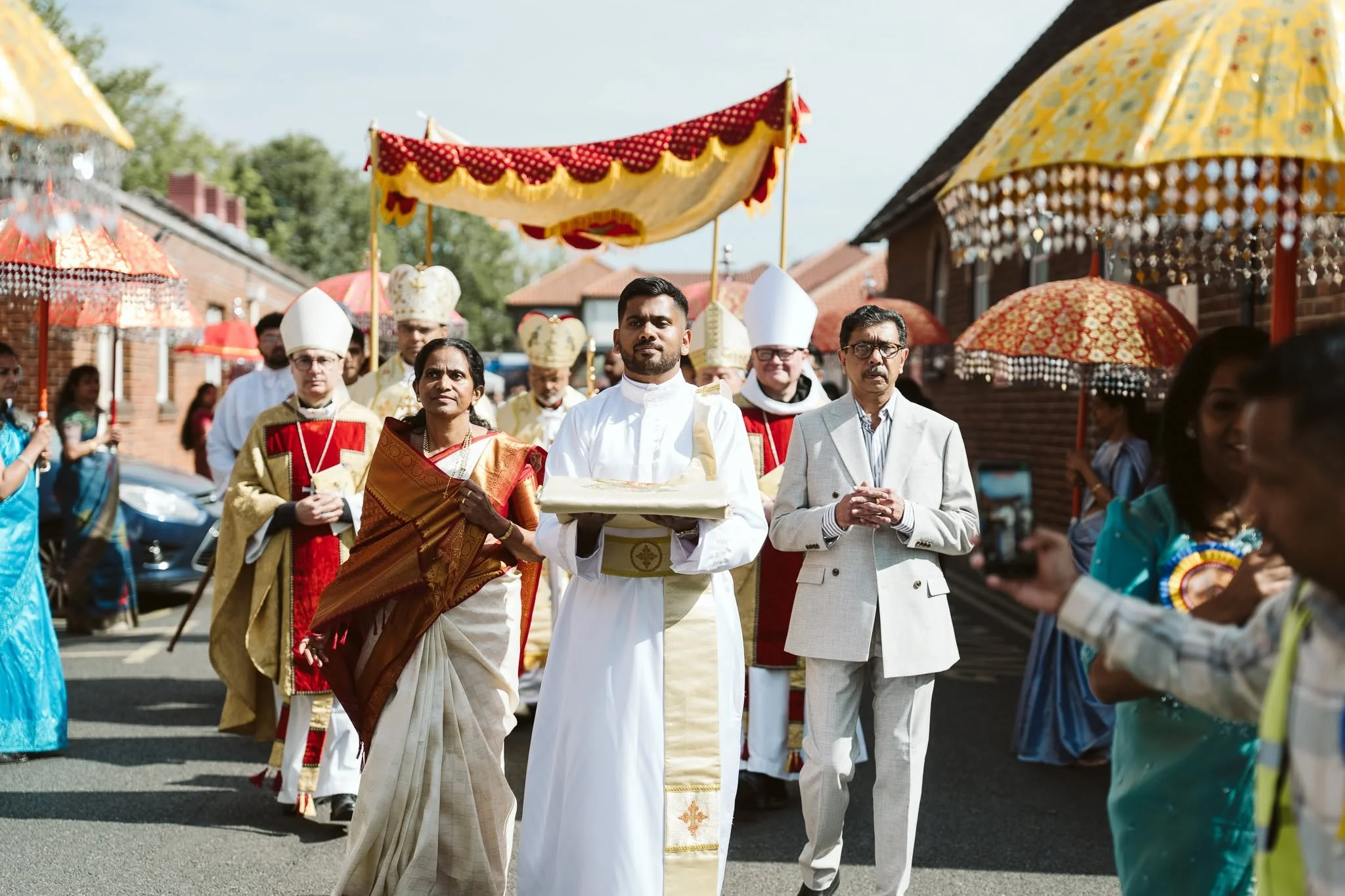
On 2nd May 2026, I was privileged not only to concelebrate the ordination of my friend Tony Simon Kocherry as the first priest ordained for Great Britain’s Syro-Malabar Eparchy, but also to read an English commentary during the ceremony. What follows is my reflection on this beautiful liturgy from a Latin priest’s perspective.
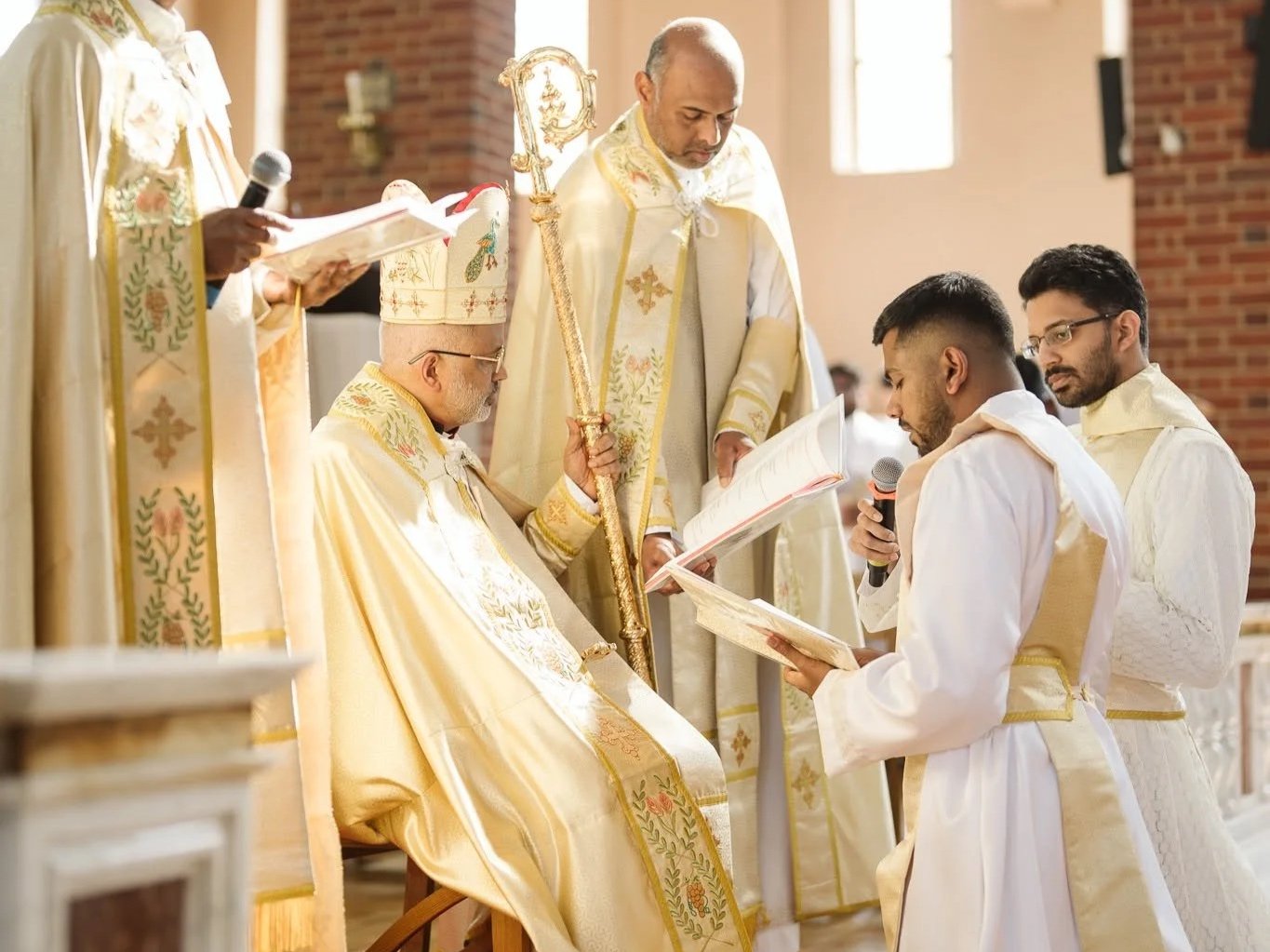
The first striking difference from the Latin ordination rite was the blessing of the priest-to-be by his parents, soon followed by the tonsure, the cutting of the ordinand’s hair by the bishop, who prays, “May Christ take away the burden of all your sins." It made me think of Samson, who lost his strength after his hair was cut and so had to abandon himself to suffering and to God’s power. St Paul also cut his hair (Acts 18;18) on the completion of the same Nazirite vow (Numbers 6:5) that Samson had made (Judges 16:17), and he freely surrendered his strength in order to rely on Christ’s, saying, “I will all the more gladly boast of my weaknesses, that the power of Christ may rest upon me” (2 Cor 12:9) and “not having a righteousness of my own, based on law, but that which is through faith in Christ, the righteousness from God that depends on faith” (Philippians 3:9).
Copyright: Syro Malabar Eparchy of Great Britain
Then the first “Qanona” begins: five of these series of psalms, hymns and prayers make up the ordination liturgy. The first emphasises that the priest’s sacramental dignity raises him above the angels, who cannot confer sacraments as the priest can:
How exalted, O priest, is this calling
Which today you have embraced!
The heavenly ministers of fire and spirit
Stand in wonder and in awe...
…when compared to the priestly lineage
Bestowed upon you this sacred day,
The hosts of heaven in all their splendour
appear as nothing in comparison!
The second Qanona develops a theme from the diaconal ordination, in which the newly-ordained deacon is said to receive one talent, from the parable of the talents (Matthew 25:14-30), and the prayer for the priest-to-be calls for more to be given:
Increase the talents
You have bestowed upon him;
May they be multiplied by Your grace,
That he may attain the heavenly bliss.
To describe the sacramental powers of a priest in terms of the parable of the talents is a rich image: it calls the priest to exercise his sacramental ministry generously, and implies that it will lead to more talents, in other words, more priestly vocations for others. But perhaps even more significant is the parallel with the parable’s rewards: both servants receive the same praise (“Well done, good and faithful servant. You have been faithful over a little; I will set you over much. Enter into the joy of your master” Matthew 25:21.23), even though one earned more than the other, because they both earned at the same rate, they both doubled their initial talents. In other words, our holiness does not depend on how many talents we receive, but on how we use them, so the priest is not automatically holier than a lay person. In addition, the Master of the parable says both quantities of talents are only “a little”, so whenever the priest feels the burden of his ministry, he can remember that God is far above anything that he is called to do for him, and so he can trust Him. This reference to the talents recurs as we will see.
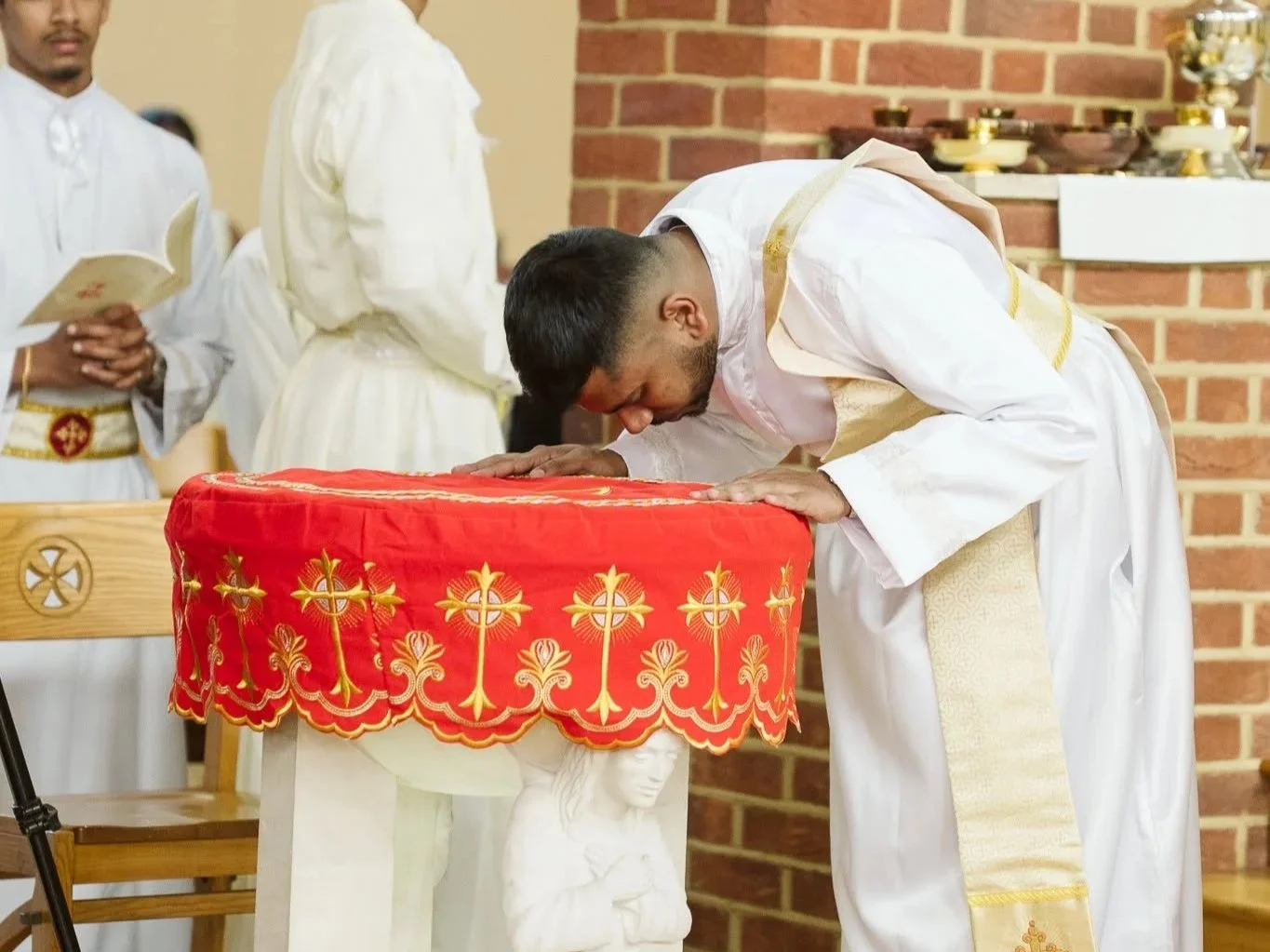
Two of these new talents are the graces to confer Baptism, which is inseparable from Confirmation in the Syro-Malabar Church, and the Holy Eucharist. The ordinand is led to kiss the two liturgical spaces of these sacraments, the font and the altar, evocative of the giving of the chalice and paten to the newly-ordained priest in the Latin rite.
Copyright: Syro Malabar Eparchy of Great Britain
The intercessions that follow are particularly beautiful, and include the concepts of the Latin liturgy’s prayer that the priest “imitates the mystery he celebrates” and “models his life on the mystery of the Lord’s Cross”:
That he may sacrifice himself for the flock, like You the Good Shepherd, and give Your life plentifully to all, we pray to you.
All: Lord, have mercy on this brother.
That he may feel privileged in proclaiming the crucified Lord and in spreading the light of the Gospel to the whole world, we pray to you.
All: Lord, have mercy on this brother.
That he may, by becoming all things to all, win all people for You, and that he may live a life that is not of the world though in the world, we pray to you.
All: Lord, have mercy on this brother.
That he may seek out the lost sheep and bring to You those that do not belong to Your flock, we pray to you.
All: Lord, have mercy on this brother.
That he may be a good Samaritan to the afflicted and the sorrowing and liberate those who suffer from poverty and injustice, we pray to you.
All: Lord, have mercy on this brother.
That he may rejoice in his sufferings for Your sake, and love Your own in this world to the end, we pray to you.
All: Lord, have mercy on this brother.
The subsequent Hymn to the Holy Spirit attributes the granting of the priesthood to the Third Person of the Trinity – “O Lord, Holy Spirit…bestow now the priestly order upon this chosen disciple” – and then describes the priestly ministry:
To guide Your Church,
To proclaim Your Gospel,
And tenderly console the sorrowful
Grant him Your grace, we pray.
When those who seek new life
Knock upon Your sacred door,
O Lord, Grant Your servant the grace to offer
The living waters of Baptism.
Grace this servant, we implore:
Let him offer the Holy Qurbana;
Let him raise Your people in virtue;
May he become love and true sacrifice.
The mention of the “sacred door” of the Holy Spirit seems to refer to John 10:1-4, which is worth quoting in full:
“Truly, truly, I say to you, he who does not enter the sheepfold by the door but climbs in by another way, that man is a thief and a robber. But he who enters by the door is the shepherd of the sheep. To him the doorkeeper opens. The sheep hear his voice, and he calls his own sheep by name and leads them out. When he has brought out all his own, he goes before them, and the sheep follow him, for they know his voice.
Jesus is the door (John 10:7.8) and St Augustine suggested the Holy Spirit was the doorkeeper (Tract. in Io., 46, ch. 2-4), so, in this passage, the shepherd represents the priest: he must himself enter “by the door”, by his personal relationship with Jesus, and the Holy Spirit will open the door, Jesus’ Sacred Humanity, to him. Then he must call his sheep, his laity, “by name” and lead them out through the door, through Christ, by leading them to love Him, and so spread his message to others outside the sheepfold. As they go out on mission, he must “go before them” and keep speaking to them “for they know his voice”: priest and laity evangelise together in harmony. Those who receive their preaching will then try to enter the sheepfold, seeking “new life”, as the prayer says, and they will “knock on [the Holy Spirit’s] sacred door”, desiring contact with Christ who is the door. The priest must then “offer the living waters of baptism.” Then the cycle will begin again: the priest sanctifies the baptised by loving Jesus himself and leading them to love Him too through the sacraments, and they then go out on mission together and bring other for baptism.
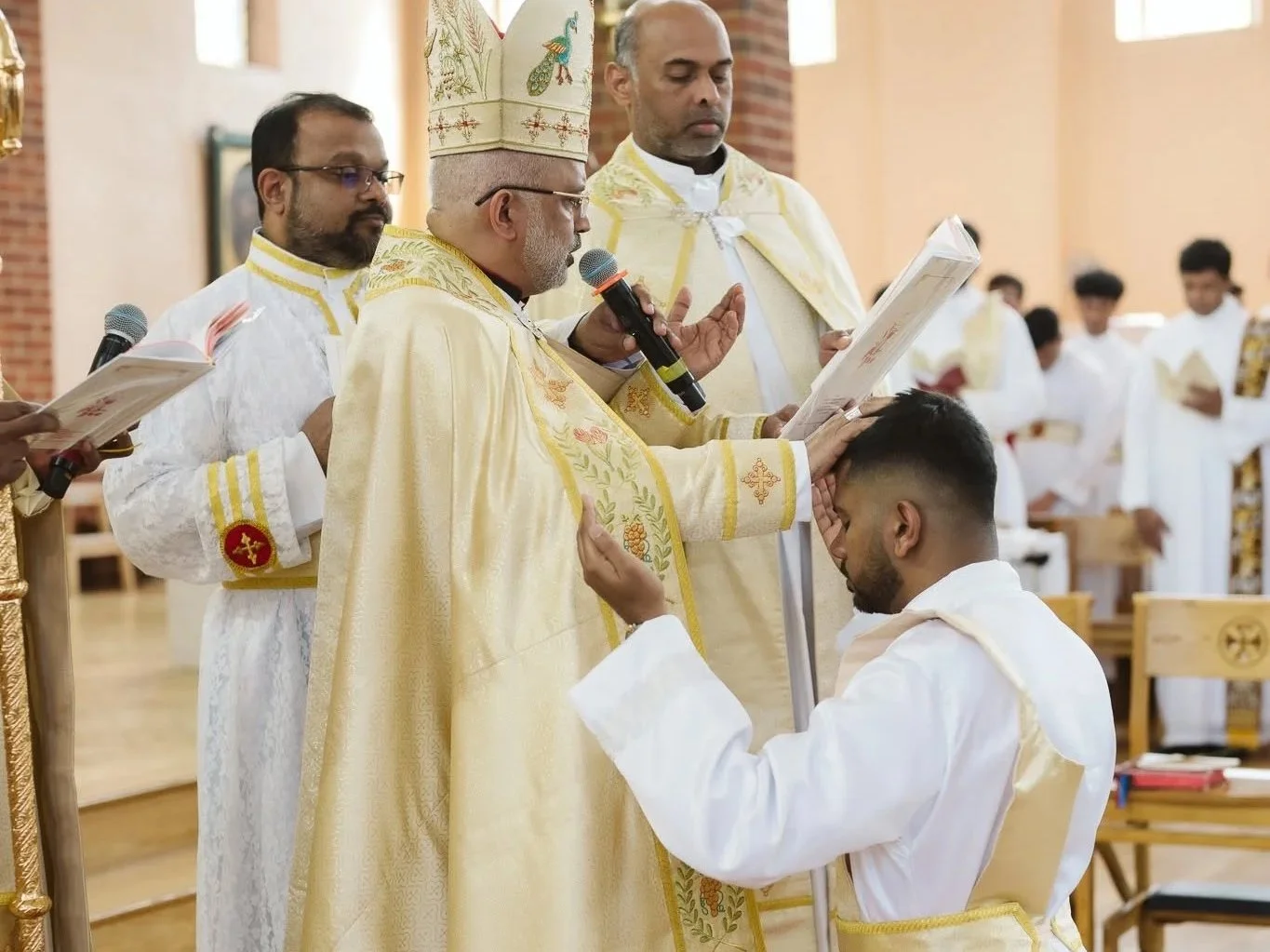
The next three prayers are the most important: the bishop prays for the grace to ordain “through his weak and unworthy hands” and then prays twice imposing his hands on the ordinand. Unlike the Latin rite’s silent imposition of both hands, the bishop raises his left hand to receive the grace of the Holy Spirit and places his right hand, palm downward, on the ordinand's head, who kneels with arms raised to receive the Holy Spirit’s gifts as the bishop offers the first prayer, which again mentions the parable of the talents:
God of all goodness, King of all mercies, Lord of all blessings, by Your ineffable mercy, You have appointed me as mediator of divine gifts to dispense the talents of sacred service to the ministers of Your holy mysteries in Your Church.
Lord, we present here before You this, Your servant, to become the chosen priest in Your holy Church through the imposition of hands, the priestly ministry handed down to us by the apostolic tradition. By the coming down of the gift of the Holy Spirit upon him, may he be made perfect for the exercise of the ministry entrusted to him by the blessings and mercy of Your only begotten Son. We offer you praise and honour, worship and thanksgiving, now, always, and + forever.
(Traces the sign of the cross on the ordinand's head)
Amen.
Copyright: Syro Malabar Eparchy of Great Britain
After the Archdeacon has called the assembly to pray for the candidate – similar to the litany of saints in the Latin liturgy – the bishop offers the second prayer with the same gestures, except that he moves his right hand from the ordinand’s head and takes his right hand when he says “to lay hands on the sick that they may be healed.” This second prayer lists the duties of the priest:
Lord Almighty God, Creator of heaven and earth and all that is, You chose the Holy Church and appointed, therein, prophets, apostles, teachers, and priests for the fullness of saints, exercise of the ministry, and for the building up of the Church.
Lord, God of Hosts, King of the whole universe, look favourably upon this, Your servant.
By the indwelling of the Holy Spirit and by holy election, set apart and accept this servant.
Grant him the grace to proclaim the word of truth.
Lord Almighty God, raise him to priesthood (the Bishop holds the right hand of the ordinand) to lay hands on the sick that they may be healed (the Bishop places his hand again on the head of the ordinand); to minister with a sincere heart and a clear conscience in Your Holy Sanctuary by offering prayers and sacrifices of thanksgiving in the Church; to bless, by the power of Your mercy, the baptismal font, for the forgiveness of sin and the mystical birth of the people called to share in Your adopted sonship; to give Your people forgiveness of sin; to bless marriages in the name of the Church; to adorn, for the glory of Your Holy Name, the children of the Holy Church with virtues; to be cheerful in the world to come, as reward for his unblemished ministry before Your Holy Presence, before the awesome throne of Your glory; to stand, we hope, by the grace and blessings of Your only begotten Son. We offer You praise and honour, worship and thanksgiving, now, always, and + forever. (Traces the sign of the cross on the ordinand's head)
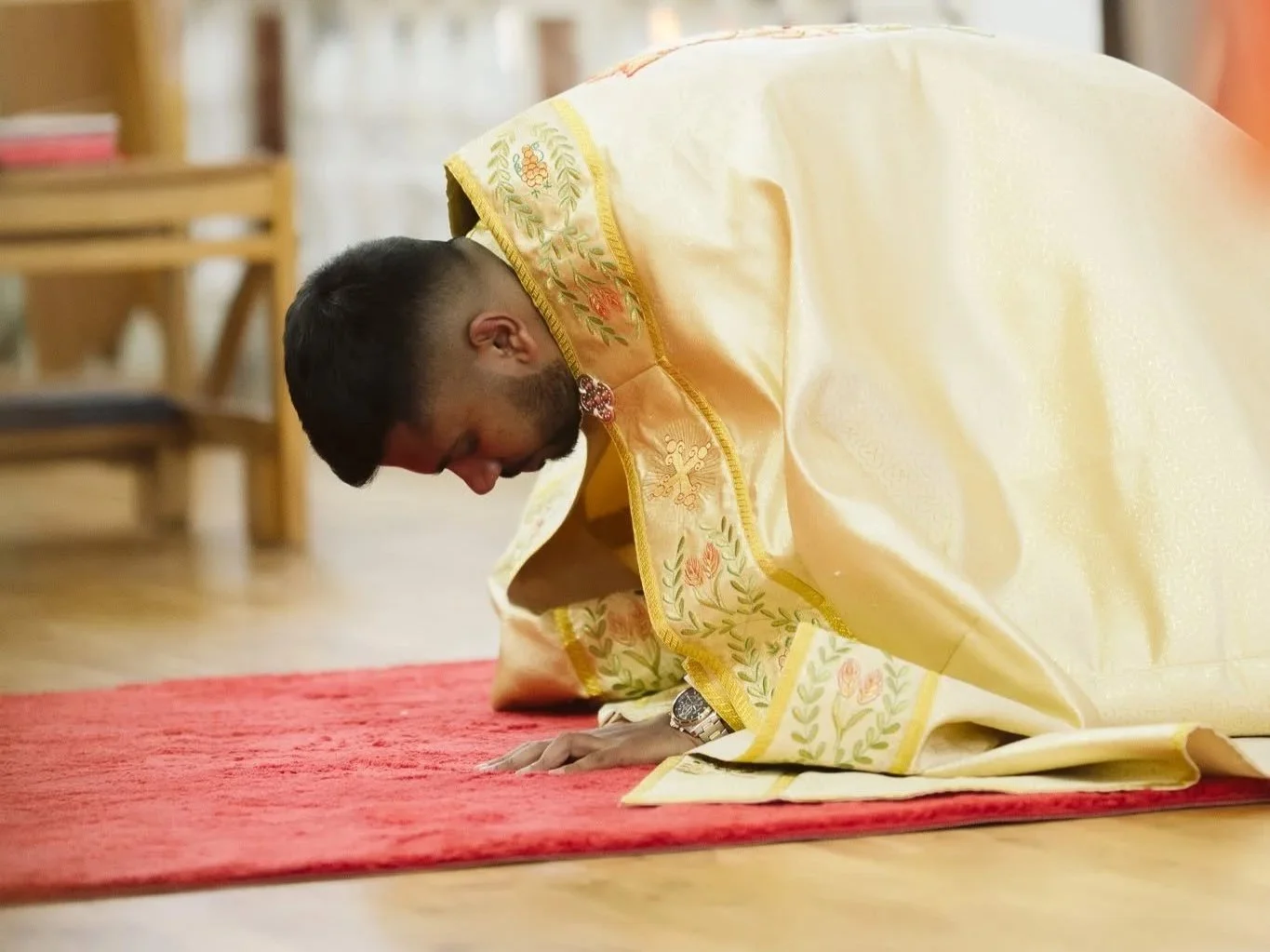
The newly-ordained priest bows before the bishop and is then vested by him and receives from him the Book of the Gospels since in the Syro-Malabar liturgy, only a priest can proclaim the Gospel. The new priest briefly prostrates in reverence before the bishop, who then begins the final Qanona, which again refers to the priesthood as “spiritual treasure.”
Copyright: Syro Malabar Eparchy of Great Britain
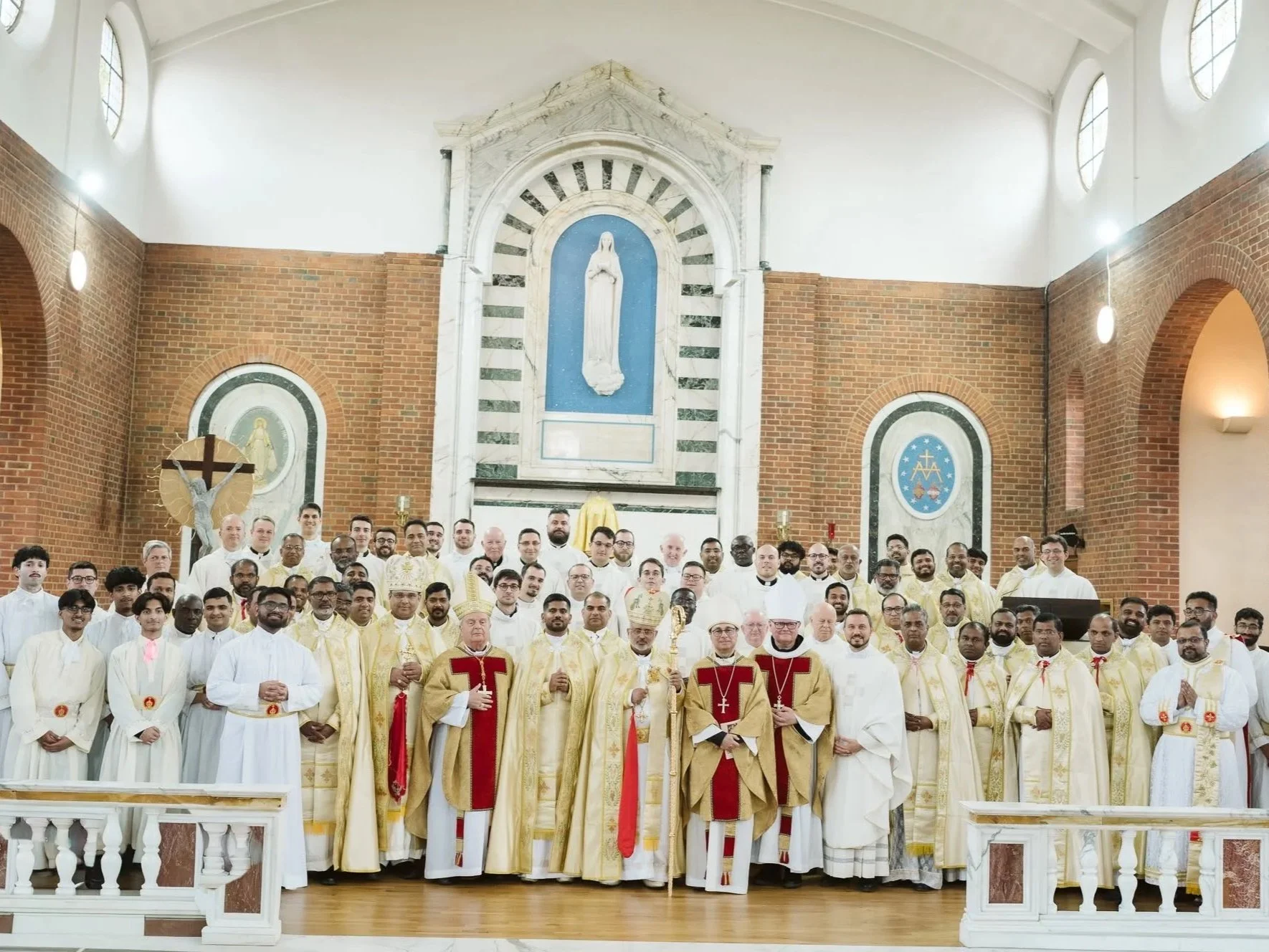
After being led around the altar, which he kisses on either side, the priest kneels for the bishop’s blessing and then offers the kiss of peace to all priests’ present and the Qurbana, the Eucharist, immediately begins, and all the priests, including the newly-ordained, concelebrate. At the final blessing, we hear again of talents:
May your heart, stamped with the sublime seal of priesthood, be always protected in holiness. May He enable you to serve all in His household according to His will. May He, when you have multiplied the given talents, set you master over them in His second coming.
The focus on the Holy Spirit in this liturgy, and the profound symbolism of the parable of the talents and of the Good Shepherd, make it an enriching experience for any priest, especially those of the Latin Church, whose understanding of priesthood can be deepened by the similarities and contrasts of the respective ordination rites.
Copyright: Syro Malabar Eparchy of Great Britain